


Cultivation Procedure
Land Preparation
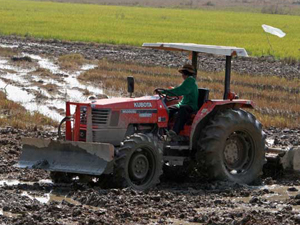 The aim of land preparation for rice production is to place the soil in the best physical condition for crop growth and to ensure that the soil surface is level.
Hand tractors help farmers prepare their land for rice production. Tillage requirements vary according to the cropping system as what may be desirable for one may be totally inappropriate for another. A good example is the contrast between lowland and upland systems. Typically for lowland rice, fields are puddled in part to destroy structure and develop a hard pan to reduce water loss through deep percolation. Such a loss of structure and the formation of a physical barrier are totally undesirable in an upland situation.
Land preparation involves plowing and harrowing to "till" or dig-up, mix, and overturn the soil, and leveling.
Tillage is done to a depth so plants can develop a root system which will physically support the plant and also allow the extraction of sufficient moisture and nutrients so yield potentials can be realized. Tillage also helps with weed control. Farmers can till the land themselves using hoes and other equipment or they can be assisted by draft animals, such as buffalo, or tractors and other machinery.
Land leveling follows tillage and is primarily done to reduce water wastage. Uneven land results in uneven water coverage meaning more water is needed to ensure all parts of the paddy are wet in preparation for the establishment of the rice seed or seedlings. Effective land leveling will improve crop establishment and care, reduce the amount of effort required to manage the crop, and will increase both grain quality and yields.
Crop Establishment
 The two main practices of establishing rice plants are transplanting and direct seeding.
Transplanting is the most popular plant establishment technique across Asia. Transplanting is when pre-germinated seedlings are transferred from a seedbed to the wet field. It requires less seed and is an effective method to control weeds, but requires more labor.
Prior to transplanting, seedlings are established in a separate nursery area. They are grown here for between 20 and 80 days before they are transplanted to the field. Seedlings may be transplanted by either machine or hand.
Direct seeding is when dry seed or pre-germinated seeds and seedlings are broadcast by hand or planted by machine. In rainfed and deepwater ecosystems, dry seed is manually broadcast onto the soil surface and then incorporated either by ploughing or by harrowing while the soil is still dry. In irrigated areas, seed is normally pre-germinated prior to broadcasting.
Water Management
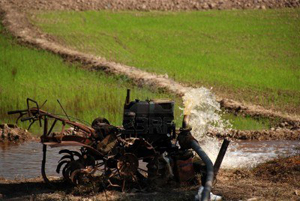 Cultivated rice has a semi-aquatic ancestry and is therefore extremely sensitive to water shortages. When the soil water content drops below saturation, most rice varieties develop symptoms of water stress. Sound water management practices are needed to use water wisely and maximize rice yield.
To ensure sufficient water, most rice farmers aim to maintain flooded conditions in their field. This is especially true for lowland rice. Good water management in lowland rice focuses on practices that conserve water (by eliminating the unproductive water flows of seepage, percolation, and evaporation) while ensuring sufficient water for the crop. In rainfed environments when optimal amounts of water may not be available for rice production, a suite of options are available to help farmers cope with different degrees and forms of water scarcity. It includes sound land preparation and pre-planting activities followed by techniques such as saturated soil culture, alternate wetting and drying, raised beds, mulching, and use of aerobic rice that can cope with dryer conditions.
Nutrient Management
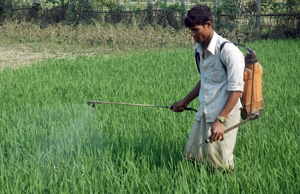 Ensuring that the rice plant gets the exact nutrients it needs to grow is of great importance. This is because each growth stage of the rice plant has specific nutrient needs
The unique properties of flooded soils make rice different from any other crop. Because of prolonged flooding in rice fields, farmers are able to conserve soil organic matter and also receive free input of nitrogen from biological sources. This biological fixation amounts to enough to help ensure a stable yield of about 3 tons per hectare per crop in the absence of applied nitrogen fertilizer.
If higher yields are the target then the rice will need more nutrients.
Site-specific nutrient management provides scientific principles for optimally supplying rice with essential nutrients. It enables rice farmers to tailor nutrient management to the specific conditions of their field, and it provides a framework for nutrient best management practices for rice.
Crop Health
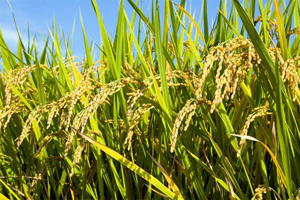 The rice plant has a wide array of enemies in the field. These include rodents, harmful insects, viruses, diseases, and weeds. Farmers use many different strategies to control these pests and diseases to maintain crop health.
Best practice in maintaining crop health revolves around an understanding of the interactions among pests, natural enemies, host plants, other organisms, and the environment to determine what if any pest management may be necessary.
Avoiding conditions that allow pests to adapt and thrive in a particular ecosystem helps to identify weak links in the pests' life cycle and therefore what factors can be manipulated to manage them. Retaining natural ecosystems such that predators and natural enemies of pests and diseases are kept in abundance can also help keep pest numbers down.
Farmers manage weeds through water management and land preparation, by hand weeding, and in some cases herbicide application.
Harvesting
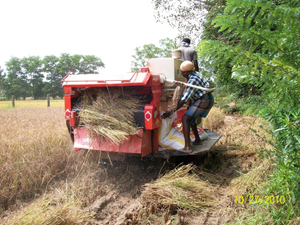 Harvesting is the process of collecting the mature rice crop from the field. Depending on the variety, a rice crop usually reaches maturity at around 115-120 days after crop establishment. Harvesting activities include cutting, stacking, handling, threshing, cleaning, and hauling. Good harvesting methods help maximize grain yield and minimize grain damage and deterioration
Harvesting can be done manually or mechanically.
Manual harvesting is common across Asia It involves cutting the rice crop with simple hand tools like sickles and knives. Manual harvesting is very effective when a crop has lodged or fallen over, however it is labor intensive. Manual harvesting requires 40 to 80 man-hours per hectare and it takes additional labor to manually collect and haul the harvested crop.
Mechanical harvesting using reapers or combine harvesters is the other option, but not so common due to the availability and cost of machinery.
Following cutting the rice must be threshed to separate the grain from the stalk and cleaned. These processes can also be done by hand or machine.
Postharvest
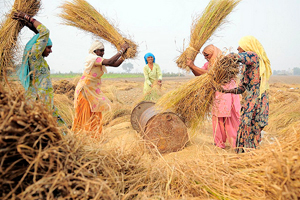 After harvest, the rice grain undergoes a number of processes depending on how it will be used. Such methods include, drying, storing, milling, and processing.
Drying
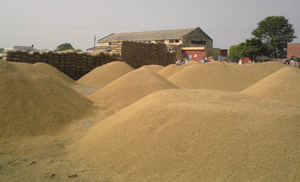 Drying is the process that reduces grain moisture content to a safe level for storage. Drying is the most critical operation after harvesting a rice crop. Delays in drying, incomplete drying or ineffective drying will reduce grain quality and result in losses.
Storing
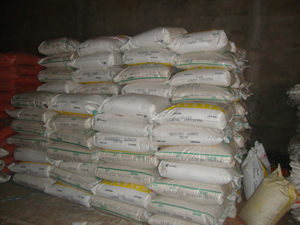 Storing grain is done to reduce grain loss to weather, moisture, rodents, birds, insects and micro-organisms.
Milling
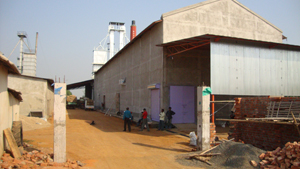 Milling is a crucial step in post-production of rice. The basic objective of a rice milling system is to remove the husk and the bran layers, and produce an edible, white rice kernel that is sufficiently milled and free of impurities.